Portfolio item number 1
Short description of portfolio item number 1

Short description of portfolio item number 1
Short description of portfolio item number 2
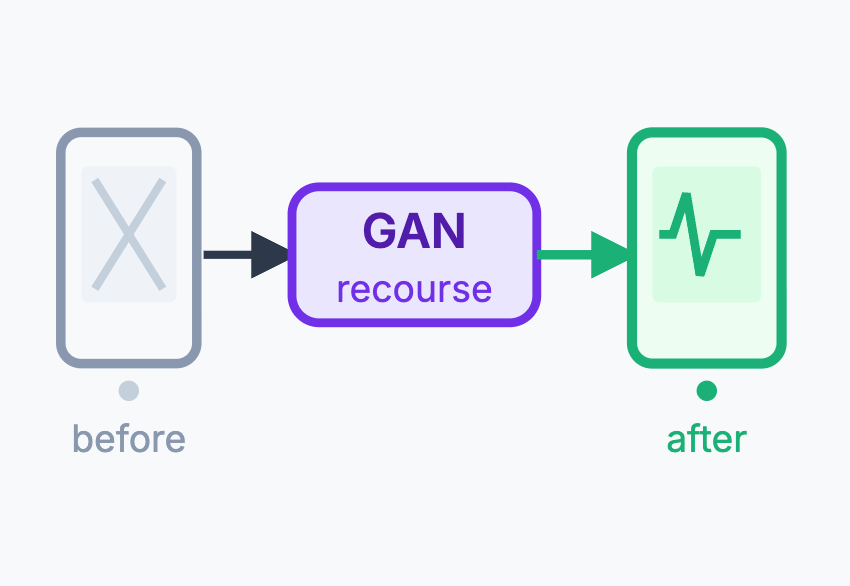
Demonstrates GAN-generated recourse for improving engagement prediction in a maternal health training app for birth attendants.
Recommended citation: Jennifer Chien, Anna Guitart, Ana Fernández del Río, África Periáñez, Lauren Bellhouse. (2022). "Actionable Recourse via GANs for Mobile Health." ML4H 2022.
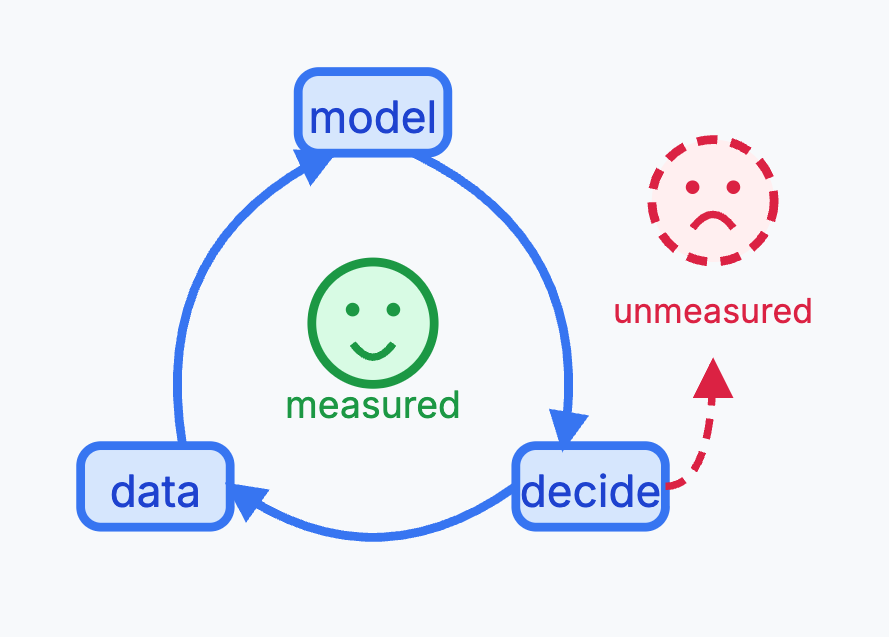
Formalizes algorithmic censoring in dynamic learning systems and proposes recourse and randomized exploration as mitigations.
Recommended citation: Jennifer Chien, Margaret Roberts, Berk Ustun. (2023). "Algorithmic Censoring in Dynamic Learning Systems." EEAMO 2023.
Argues that replacing human research participants with AI surrogates conflicts with core values of representation and inclusion. Editors' Choice at CHI 2024.
Recommended citation: William Agnew, A. Stevie Bergman, Jennifer Chien, Mark Diaz, Seliem El-Sayed, Jaylen Pittman, Shakir Mohamed, Kevin R. McKee. (2024). "The Illusion of Artificial Inclusion." CHI 2024.
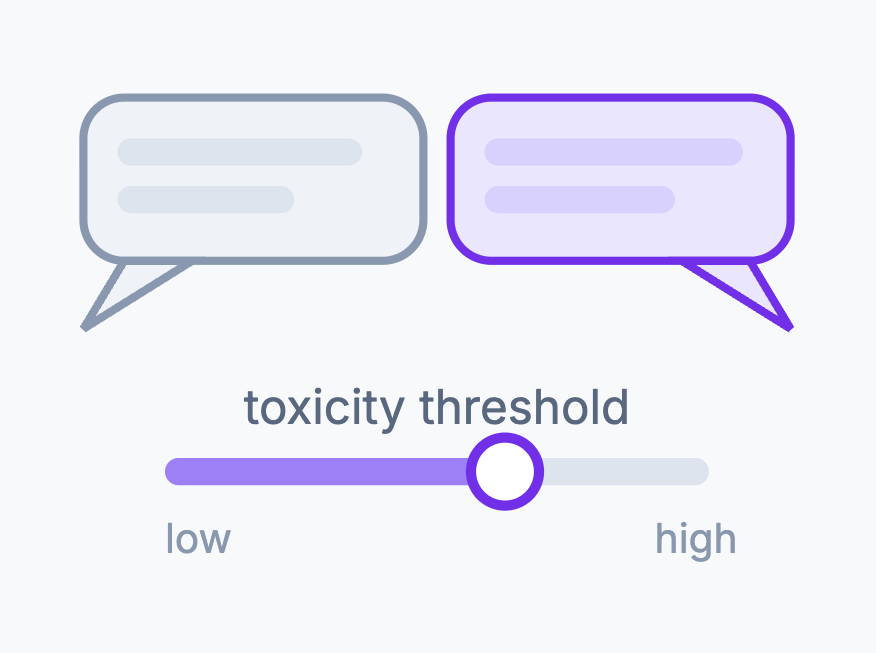
Extends algorithmic recourse to generative language models, letting users dynamically adjust toxicity-filtering thresholds for language reclamation.
Recommended citation: Jennifer Chien, Kevin R. McKee, Jackie Kay, William Isaac. (2024). "Recourse for Reclamation: Chatting with Generative Language Models." CHI Late Breaking Work (LBW) 2024.
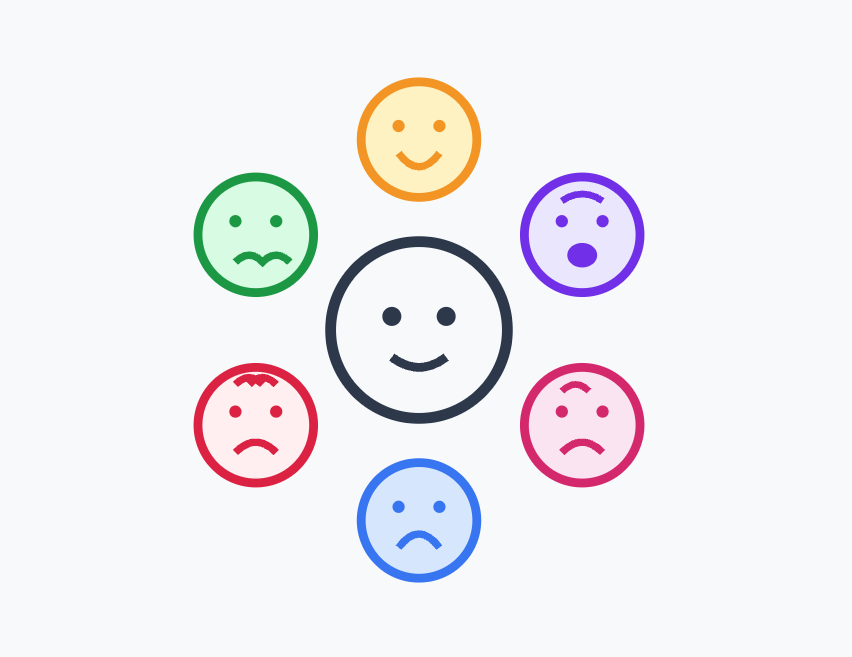
Expands representational harm beyond behavioral measures to cognitive and affective states, with a focus on large language models.
Recommended citation: Jennifer Chien, David Danks. (2024). "Beyond Behaviorist Representational Harms: A Plan for Measurement and Mitigation." FAccT 2024.
A meta-analysis of 139 fairness papers reveals a US-centric, binary approach to identity, with recommendations for more inclusive framings.
Recommended citation: Jennifer Chien, A. Stevie Bergman, Kevin R. McKee, Nenad Tomasev, Vinodkumar Prabhakaran, Rida Qadri, Nahema Marchal, William Isaac. "(Unfair) Norms in Fairness Research: A Meta-Analysis." In Submission.
Takes a philosophical view of how stochastic AI behavior challenges trust, proposing latent value modeling to assess alignment.
Recommended citation: Jennifer Chien, David Danks. "Trustworthiness in Stochastic Systems: Towards Opening the Black Box." In Submission.
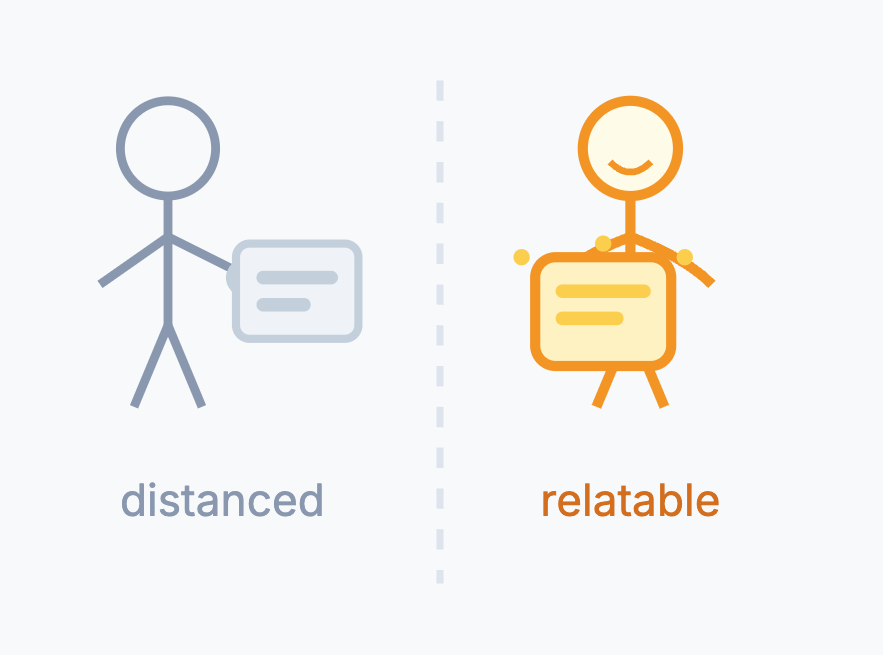
Examines how Embedded Ethics curricula can inadvertently alienate CS students, and calls for more broadly relatable framings of ethical dilemmas.
Recommended citation: Louie Ortiz and Jennifer Chien. 2026. "Making Ethics Matter: Relatable Pedagogical Approaches for Every Computer Science Student." RESPECT 2026.
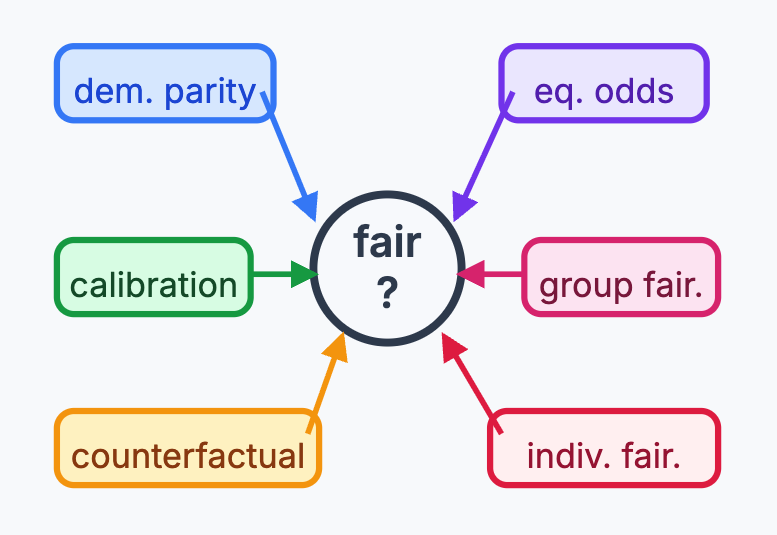
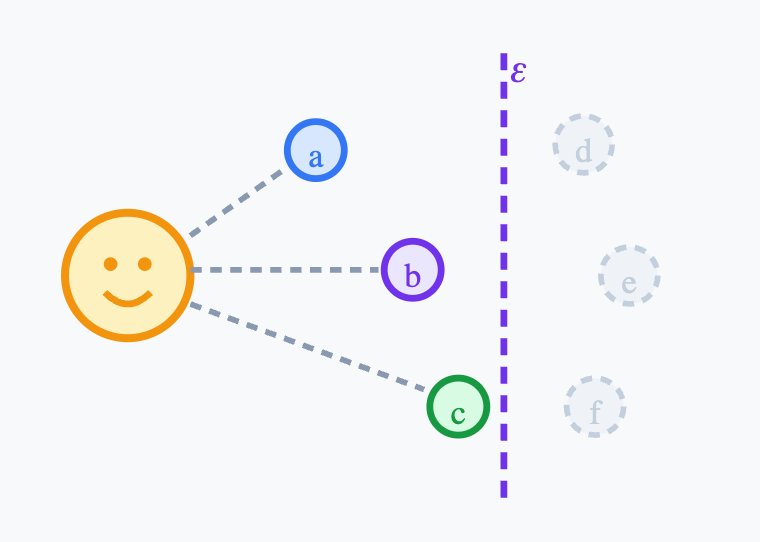
Proposes equity in epistemic utility as an alternative to conventional fairness in personalized recommender systems.
Recommended citation: Jennifer Chien, David Danks. "Fairness Vs. Personalization: Towards Equity in Epistemic Utility." Journal of Responsible Computing 2026.
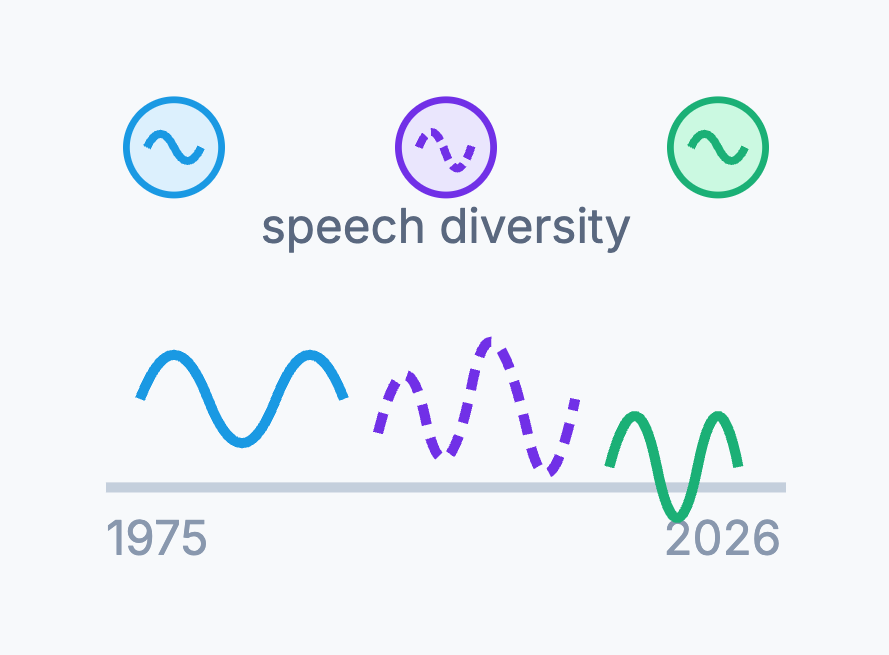
A 50-year scoping review of Interspeech/ICASSP research reveals medicalized framings and ableist language limiting inclusion of neurodivergent speech.
Recommended citation: Rebecca Lietz, Jingjin Li, Peiyao Liu, Jennifer Chien, Norman Su, Shaomei Wu. (Forthcoming). "Making Room for Speech Diversity: A 50 Year Retrospective of Speech Science and Technology through a Neurodivergent Lens." Interspeech 2026.
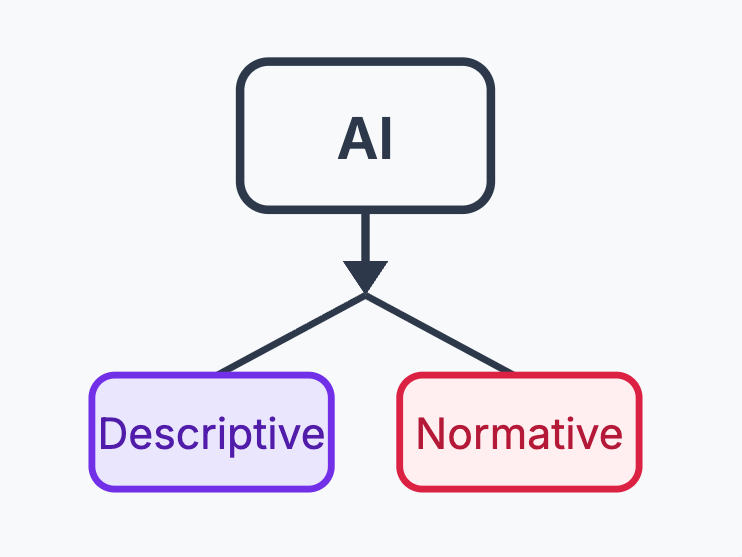
Proposes a framework separating descriptive from normative aspects of generative AI representations, arguing for plurality over a single unbiased standard.
Recommended citation: Jennifer Chien. (Forthcoming). "What Should AI Generate? Moving Beyond Bias in Generative Systems." AIES 2026.
Published:
Researchers and developers increasingly rely on toxicity scoring to moderate generative language model outputs, in settings such as customer service, information retrieval, and content generation. However, toxicity scoring may render pertinent information inaccessible, rigidify or “value-lock” cultural norms, and prevent language reclamation processes, particularly for marginalized people. In this work, we extend the concept of algorithmic recourse to generative language models: we provide users a novel mechanism to achieve their desired prediction by dynamically setting thresholds for toxicity filtering. Users thereby exercise increased agency relative to interactions with the baseline system. A pilot study (n=30) supports the potential of our proposed recourse mechanism, indicating improvements in usability compared to fixed-threshold toxicity-filtering of model outputs. Future work should explore the intersection of toxicity scoring, model controllability, user agency, and language reclamation processes – particularly with regard to the bias that many communities encounter when interacting with generative language models.
Published:
Discussing interdisciplinary paths to computer science with local high schoolers. Purely technical paths aren’t the only one!
Published:
Algorithmic harms are commonly categorized as either allocative or representational. This study specifically addresses the latter, focusing on an examination of current definitions of representational harms to discern what is included and what is not. This analysis motivates our expansion beyond behavioral definitions to encompass harms to cognitive and affective states. The paper outlines high-level requirements for measurement: identifying the necessary expertise to implement this approach and illustrating it through a case study. Our work highlights the unique vulnerabilities of large language models to perpetrating representational harms, particularly when these harms go unmeasured and unmitigated. The work concludes by presenting proposed mitigations and delineating when to employ them. The overarching aim of this research is to establish a framework for broadening the definition of representational harms and to translate insights from fairness research into practical measurement and mitigation praxis.
Published:
User agency (i.e., the ability to affect change) is vital for preserving freedom, free will, and independence. As machine learning models are deployed in high-stakes domains like finance, hiring, and health, protecting agency becomes imperative. This talk examines two facets of user agency: overturning undesirable predictions over time and impacts on cognitive reasoning. Grounded in principles of user control and transparency, this work ensures machine learning systems empower users rather than constrain them.
Published:
This talk traces the evolving meaning of representation: from the early days of symbolic AI, when researchers sought to model human cognition through explicit world-models, to today’s generative systems that learn statistical representations from datasets. In the shift from modeling to generation, representation has transformed the question of how machines know the world to how machines participate in constructing it. I first situate representation historically within AI’s technical lineage, tracing the move from symbolic reasoning to data-driven learning. I contrast these definitions with social dimensions of representation: what it means to be represented in media and cultural narratives, and how visibility shapes identity and belonging. Finally, I examine how generative AI systems contribute to both technical and social senses of representation, shaping what is visible, imaginable, and possible. As generative systems begin to shape what can be seen and conceived, this new representational order demands renewed ethical attention. It calls for new methods of evaluation, new frameworks for accountability, and new forms of deliberation about which representational baselines ought to guide collective notions of representation.
Published:
In the talk titled, I will explore a central tension in decisions in generative AI representations: current approaches to “fixing” representational harms often push toward convergence — consensus on what is appropriate, standardized evaluations, universal guidelines. But lived experiences of representation demand the opposite: multiplicity, context-dependence, the ability to be legible in some contexts while pushing boundaries in others. In this talk I provide high-level guidance that required a focus not only on the distributional effects of disparities in representations, but also the process of creating with generative AI, shaping what possibilities are thinkable, imaginable, and relevant. I enumerate design opportunities: namely 1) context-conditional defaults and friction, for a system that aims to broaden our horizons (or set of possibilities), and 2) artifacts for representational provenance, that aim to carry some of the context alongside AI-generated content, creating opportunities for critical and measured engagement. Overall, the proposed affordances asked us to think about what a representation is intended to depict and stand for, who it’s for, and how it that context is carried (or removed) as it is ported into different contexts.
Undergraduate course, University 1, Department, 2014
This is a description of a teaching experience. You can use markdown like any other post.
Workshop, University 1, Department, 2015
This is a description of a teaching experience. You can use markdown like any other post.